API Integration for Aspel SAE & Microsip: How to Connect Your Legacy ERP
Published by Maieutica Labs • September 26, 2026
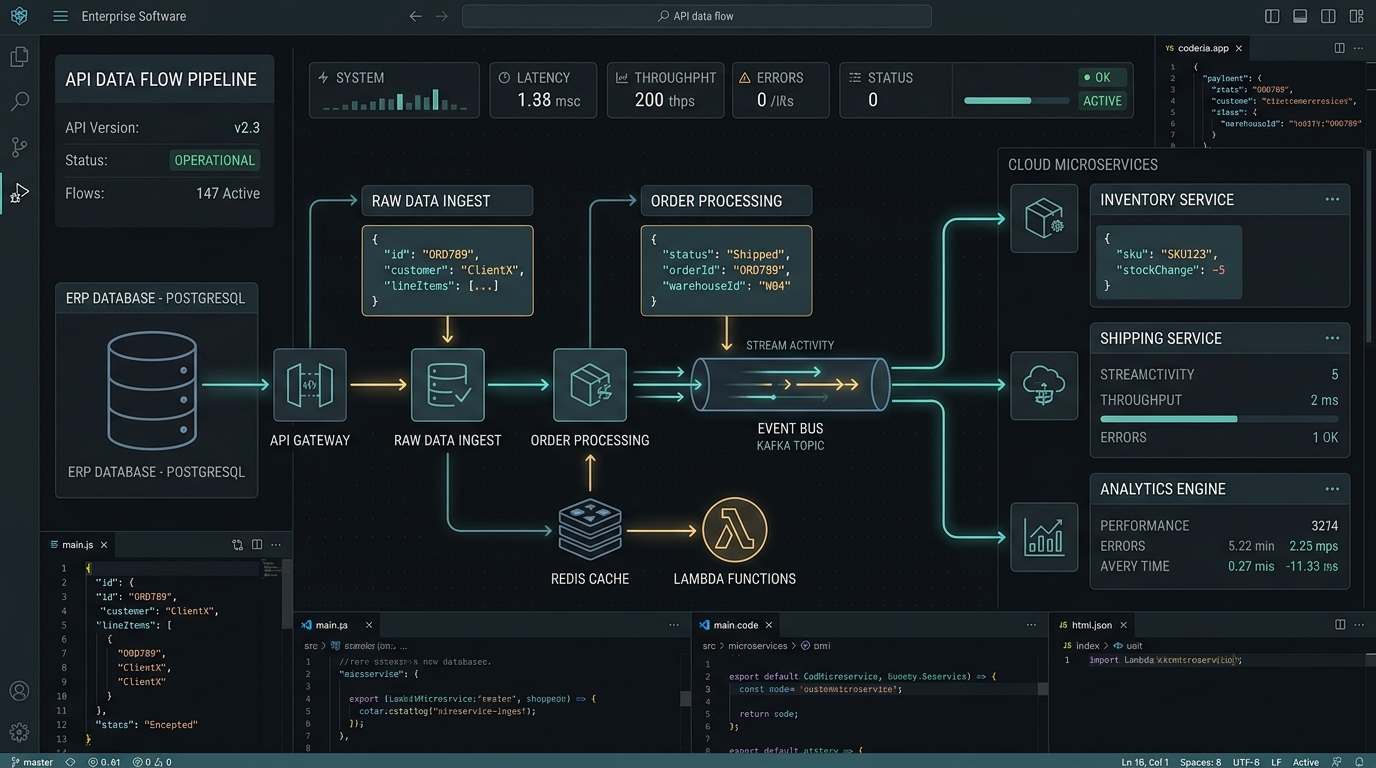
Across Mexico, thousands of distributors, wholesalers, and manufacturers rely on on-premise desktop ERPs like Aspel SAE and Microsip for invoicing, receivables, and inventory control. While stable and compliant with local tax law, they face a severe bottleneck in modern business: they were never architected for RESTful cloud communications. Attempting to connect Shopify stores, modern CRMs, or field-sales apps without proper integration engineering leads to database deadlocks, overselling, and operational friction.
1. The Common Mistake: Direct Injections into Firebird or SQL Tables
The initial instinct of many inexperienced developers is opening raw ODBC connections or executing direct SQL INSERTs into the ERP's Firebird or Microsoft SQL Server tables. This is hazardous: commercial legacy ERPs maintain proprietary referential integrity, internal fiscal sequence counters, and table-locking mechanisms that are not publicly documented. Direct writes easily corrupt ledger tables, desynchronize CFDI 4.0 electronic stamps, or trigger catastrophic database crashes during peak invoicing hours.
2. The Resilient Architecture: Isolated Orchestration Middleware
The proven engineering pattern is deploying an edge orchestration middleware service that functions as a secure gateway. Running within the client's local or private network perimeter, it exposes a modern REST API with JWT or mTLS authentication to cloud consumers. To communicate with Aspel or Microsip, the middleware consumes official integration SDKs (Aspel COM SDK or Microsip object layer), guaranteeing that every order, customer, or invoice insertion adheres strictly to the vendor's internal validation rules.
3. Bidirectional Synchronization and Concurrency Management
An efficient integration orchestrates two critical streams: high-frequency extraction of inventory levels and tiered pricing to external platforms, and asynchronous ingestion of inbound sales orders. Employing an event queue pattern with exponential backoff, our middleware guarantees that even if local branch broadband drops or the on-premise server is choked during payroll runs, no e-commerce order is dropped: transactions buffer reliably and apply sequentially the moment resources free up.
4. Transforming a Legacy System into an Omnichannel Engine
You do not need to spend millions or paralyze operations for months migrating to an entirely new ERP just to sell online or equip your sales force with mobile apps. With an API integration layer built with engineering rigor, Aspel SAE and Microsip become high-velocity transactional engines powering modern digital channels with sub-10-second inventory sync. At Maieutica, we build robust middleware that unlocks your current infrastructure's full commercial potential.